1. When Cities Grow: Urban Planning and Segregation in the Prewar US Solo-authored job market paper, recipient of the Distinguished CESifo Affiliate Award (2023), the AREUEA Best Paper Award by a Junior Scholar (2022), and the IPUMS USA Research Award (2019).
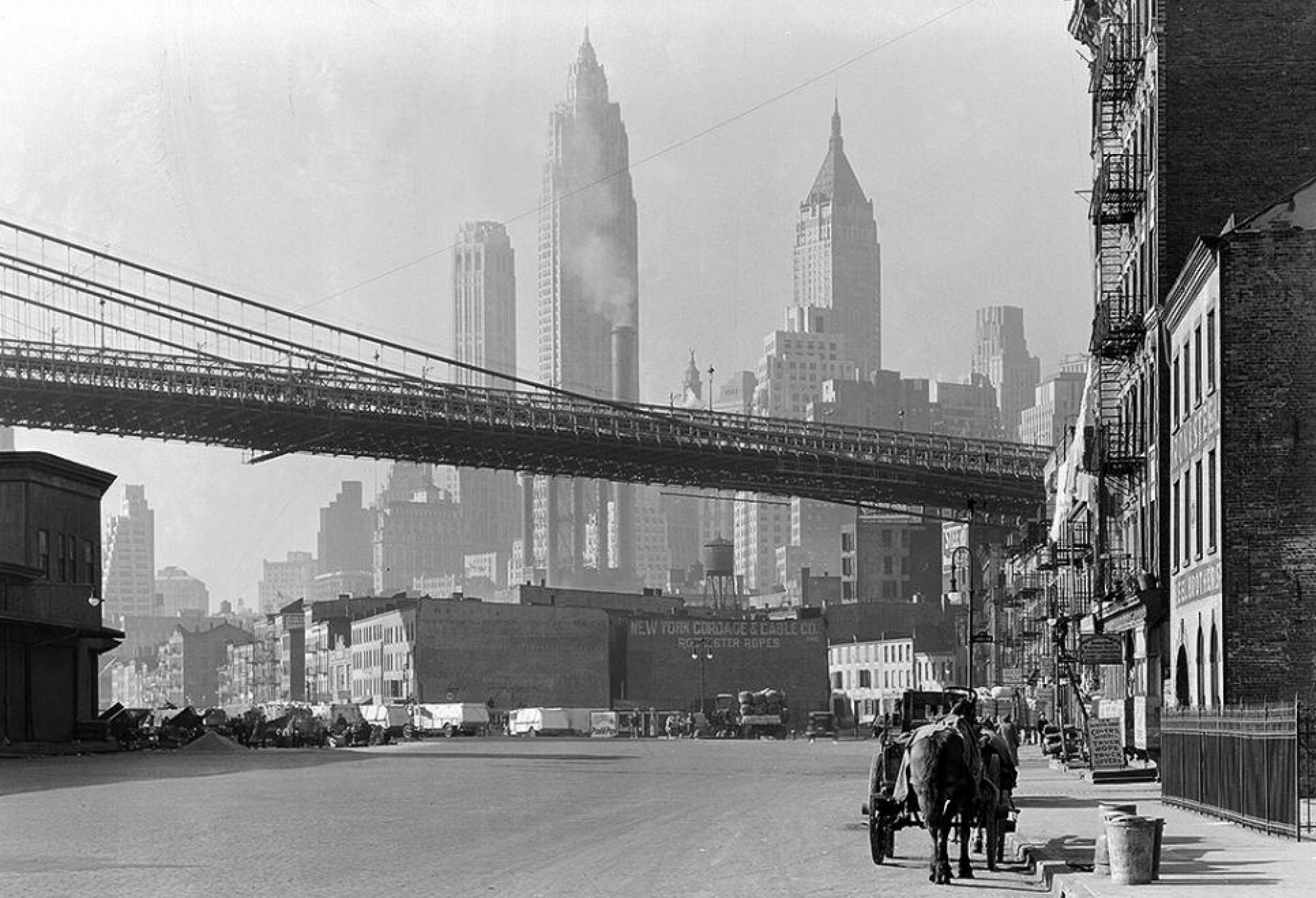
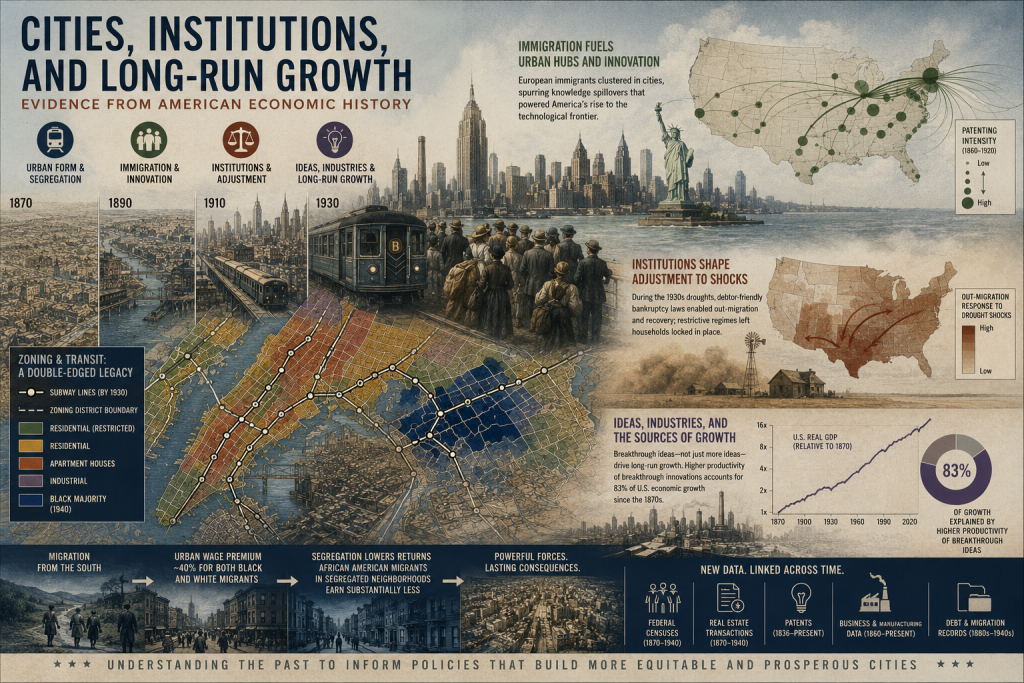
This paper follows New York City from 1870 to 1950, using federal census records and newly digitized real-estate transactions, to ask what segregated the city. Transit came first. Segregation rose as the subways spread, and the 1916 zoning code largely formalized a pattern that was already in place.
2. Immigration, Innovation, and the Geography of Growth With Costas Arkolakis and Michael Peters
Appendix
Supplemental Material
Media Coverage : Forbes, VoxEU
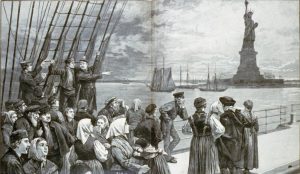
Immigration adds workers to an economy, but not just any workers, and not just anywhere. Between 1850 and 1920, millions of Europeans crowded into a handful of American cities. This paper asks how much the country’s rise to the technological frontier depended on where those newcomers settled and what skills they brought.
3. Debt, Drought, and Mobility: How Bankruptcy Institutions Shape Adjustment to Economic Shocks With Tao Chen, Marta Santamaria, Claudia Steinwender.
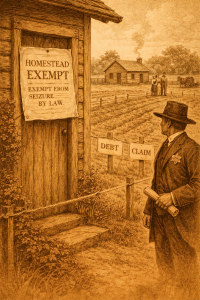
Homestead exemptions protected nineteenth-century farmers from their creditors and, in doing so, tied them to their land. This paper asks what happened when federal bankruptcy law cut them loose, and how credit institutions shaped the movement out of American agriculture.
4. Growing Through Vintages With Ana Cecília Fieler — 2026 DRAFT IS POSTED!
Appendix
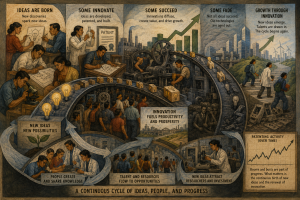
Most patents make a better version of something. A few are breakthroughs that start an industry. Using a century and a half of American patents and manufacturing censuses back to 1860, this paper asks how much of US growth came from that second kind of invention.
<Other Joint Work>
- Under Control? The Effects of New York City Rent Control on 1920s Housing Market, with Maximilian Günnewig-Mönert, Ronan Lyons
- The latest joint version (March 2024) is Chapter 2 of Maximilian Günnewig-Mönert’s PhD thesis at Trinity College Dublin; this version is posted on this website and publicly available. Note: in that document, the first-person ‘I’ refers to “Maximilian Günnewig-Mönert.”
- BlueChoice: A Fuzzy Multi-Criteria Framework for Converging Wave Energy Converter Selection through Community and Expert Insights, with Vishnu Vijayasankar, Eric Wade, Xiangyu Lu, Lei Zuo
-
Social Agglomeration Forces and the City, with Peter Luff
- “American Intergenerational Mobility in History and Space”, with Costas Arkolakis, Rodrigo Adao, Jack Liang
<Past Research Endeavors and Featured Articles>
- Details of the National Science Foundation grant, joint with Costas Arkolakis and Michael Peters (RIDIR: A Big Data Approach to Understanding American Growth) are available here: https://www.nsf.gov/awardsearch/showAward?AWD_ID=1831524&HistoricalAwards=false
- Details of National Science Foundation (Doctoral Dissertation Research in Economics: Urban Transit Infrastructure and the Growth of Cities) are available here: https://nsf.gov/awardsearch/showAward?AWD_ID=1658827&HistoricalAwards=false
- My research was covered in Columbia Economics Magazine. You can download the full version here: http://econ.columbia.edu/
files/econ/content/documents/ columbia_economics_fall_2017_ web.pdf, and - Yale Daily https://news.yale.edu/2018/11/01/measuring-immigrations-role-us-rise-economic-power
- Yale Daily’s Featured Article on the front page: August 6, 2022: https://egc.yale.edu/research/sun-kyoung-lee-uses-data-trace-roots-urban-segregation